The series that I developed for HandShake 7 revolved around concepts that has long interested me.
That of “lexical semantics,” “the analysis of word meanings and relations between them” (Oxford Dictionary) and the use of typefaces for communicating ideas and evoking feeling.
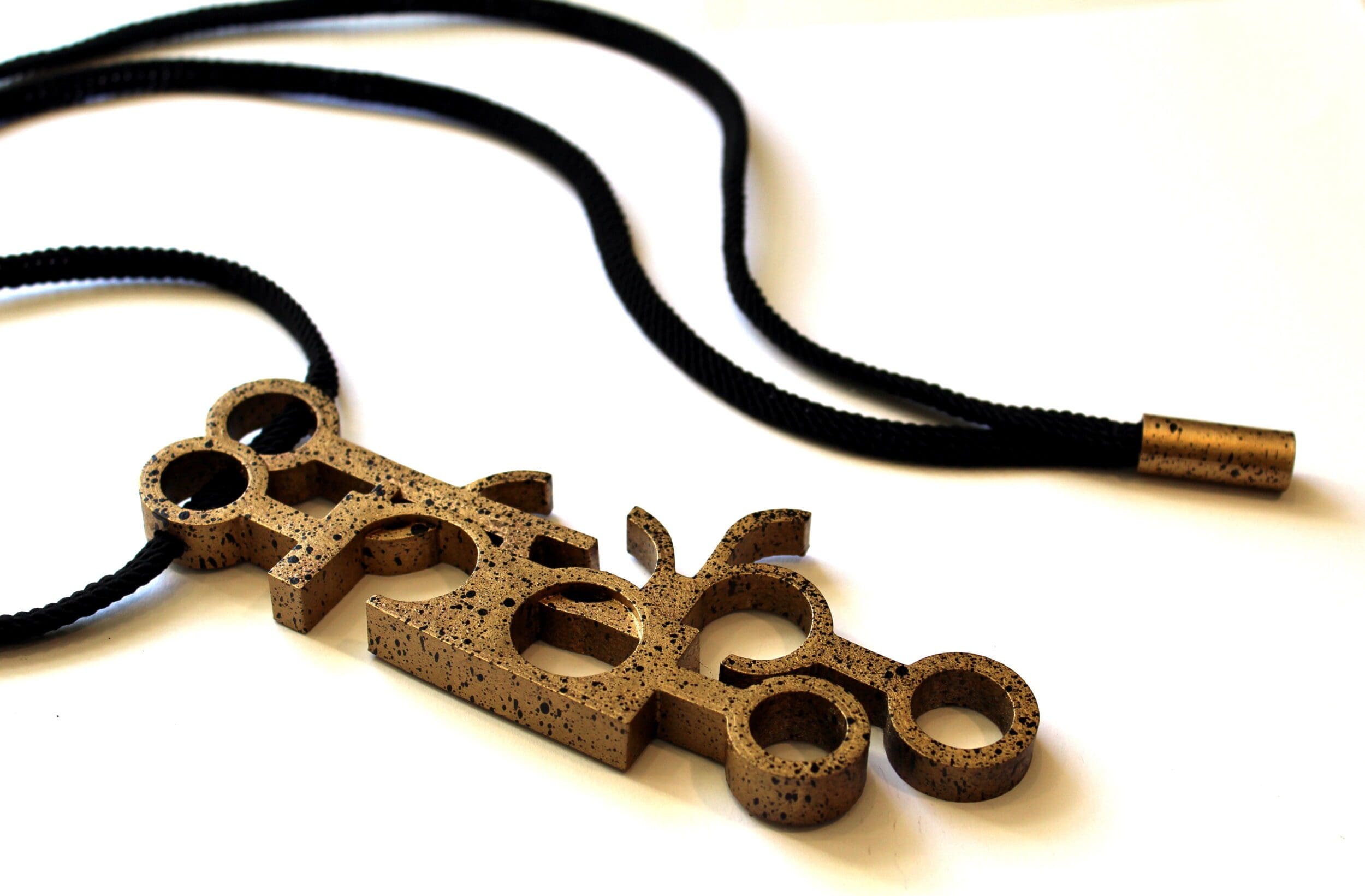
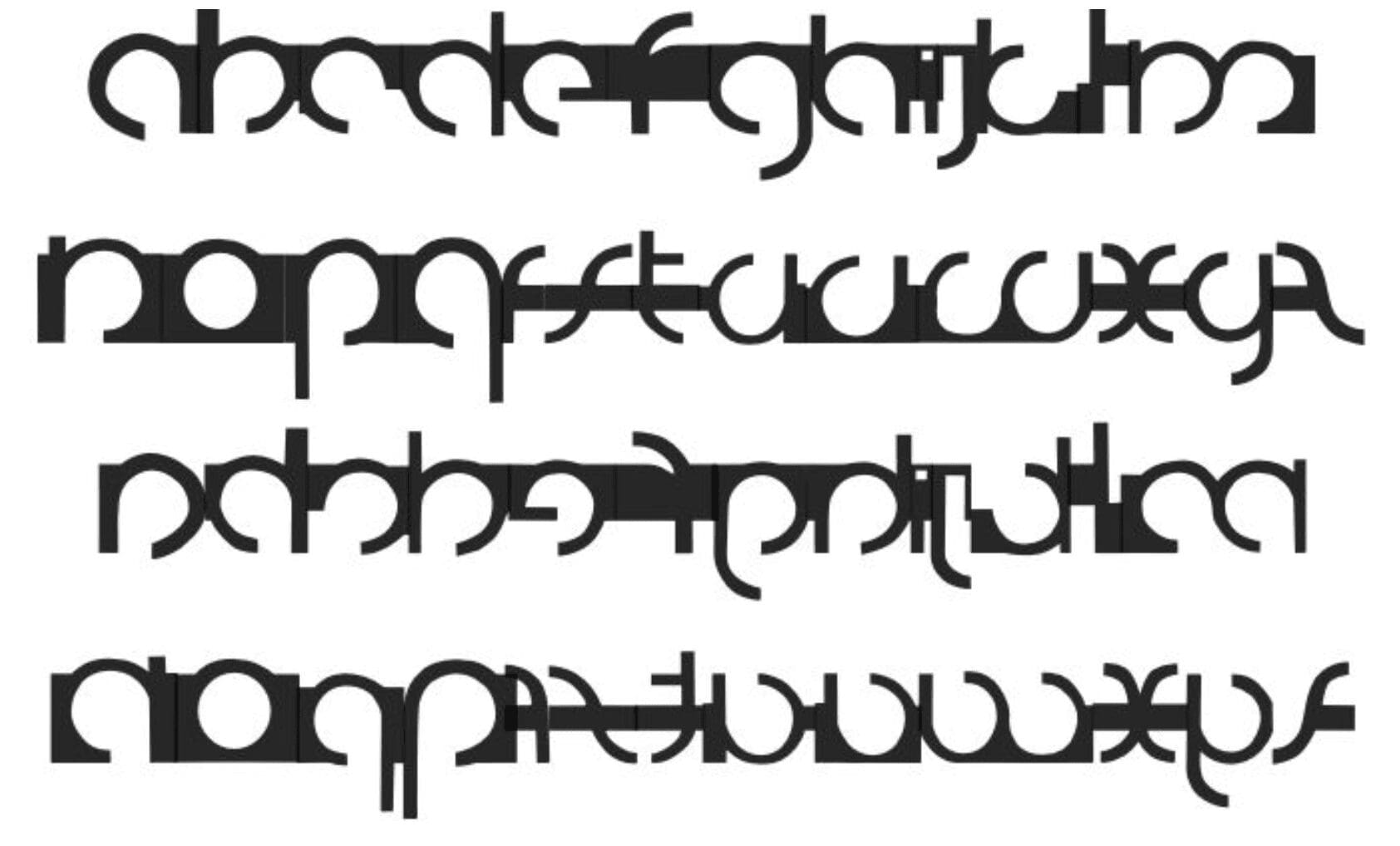
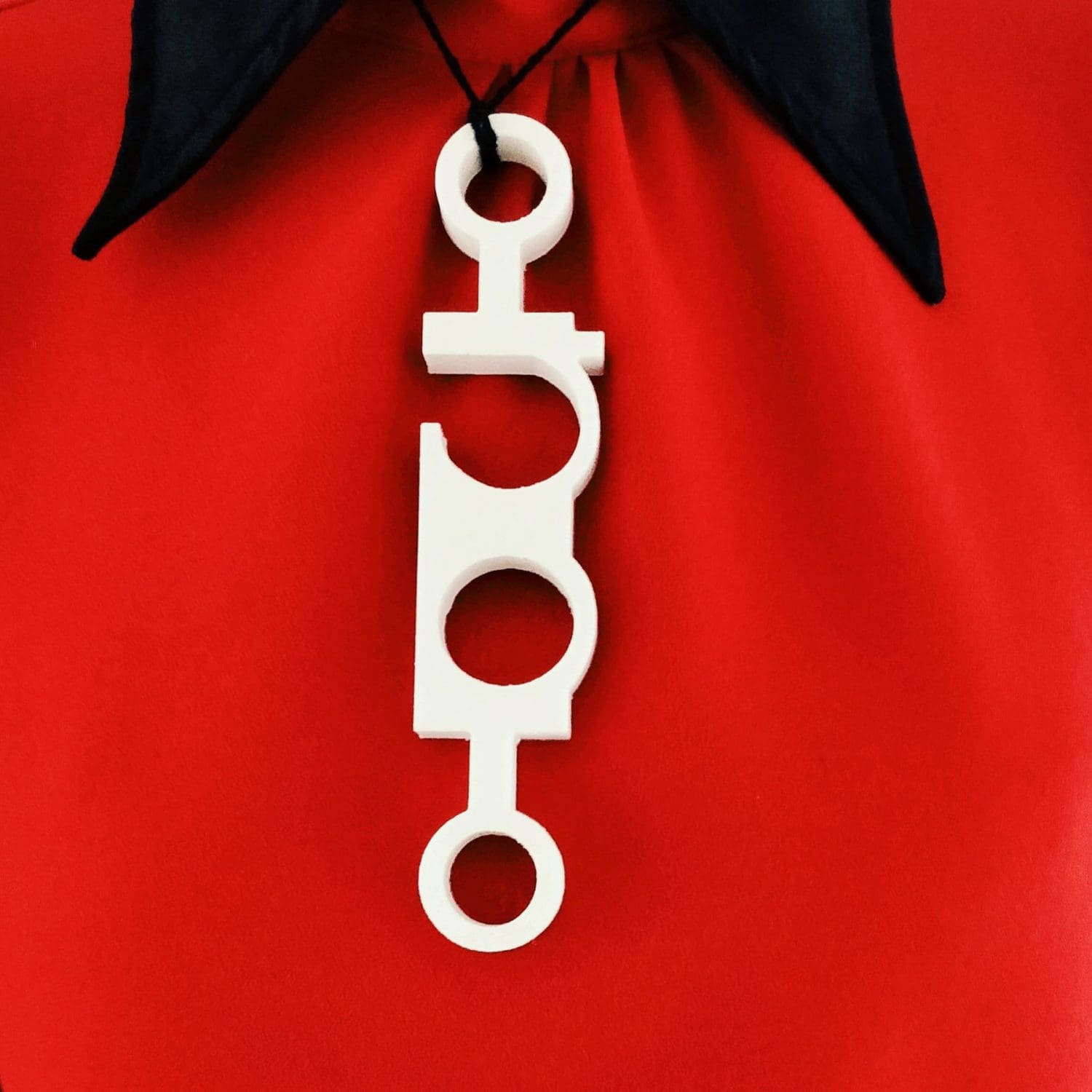
For the series “Yes, No, Maybe” I created a typeface in which each letter crashed into another. The letters, while somewhat readable, were not distinct from each other but were part of the whole of the word, phrase, or repetition.
The words Yes and No are definitive. They communicate a very clear meaning and intention, with no room for interpretation. Maybe, on the other hand, is open-ended and, when used, allows the individual to change their stance over time or under different circumstances.
I feel that the pieces have something of an architectural feel to them. Buildings and monuments, like language, have form and structure. I played with the layering of the surface of the pieces with “steps” between letters or words as I felt that there are steps between the three words. With Maybe as the midpoint and Yes and No as either an up or down step,
Exhibiting in a gallery such as Galerie Marzee is incredible. It is humbling to have work in a space that houses so much experience and wisdom.
within the walls of the remarkable building… and to exhibit in a space that houses such an extensive collection of contemporary jewellery greats and hosts shows of the best of the best is mind-boggling.
Handshake 7 has offered me the opportunity to continue to build strong relationships within the contemporary jewellery world in Aotearoa and internationally. These connections are priceless. To speak with people who understand the community, your work, the importance of making to you, and who will agree with you or question you, is invaluable. Being a maker means that you often work in a vacuum. You’re huddled in your studio, making alone and without the opportunity to be stretched and challenged.This is something that Handshake offers in a safe environment- but not too safe so you don’t grow!
Category: Handshake4
-
Completion…
-
Masterclasses- further reflections
As I look back on the experience, I further appreciate that there is nothing quite like hearing how others approach their work to inspire and make you question your own approach to your own work.
Because of the way the masterclasses were structured, you had access to this information and could see how others in the cohort were investigating their making.
When I sat in on others’ one-on-ones’ the guidance and suggestions that were offered to others often resonated with me in response to my work/making.
There was such a generosity of information, knowledge, and experience from Katharina Dettar and Estela Saez Vilanova.
Having to explain your concept, work, development, and approach is always challenging, as ideas can often be so clear in one’s head, but actually communicating that succinctly to others is difficult. The good thing is that by doing so, it helps clarify things in your own mind. Or it allows you to see the gaps in your thinking or making… and the opportunity to expand on the idea.
As artists the opportunity to talk about your work while it is in progress is rare. It can throw you curveballs. It can force you to start over and discard the pieces you’ve created thus far… or it can force you to push through your doubts.
-
The things you do !!! Thanks Estela Saez
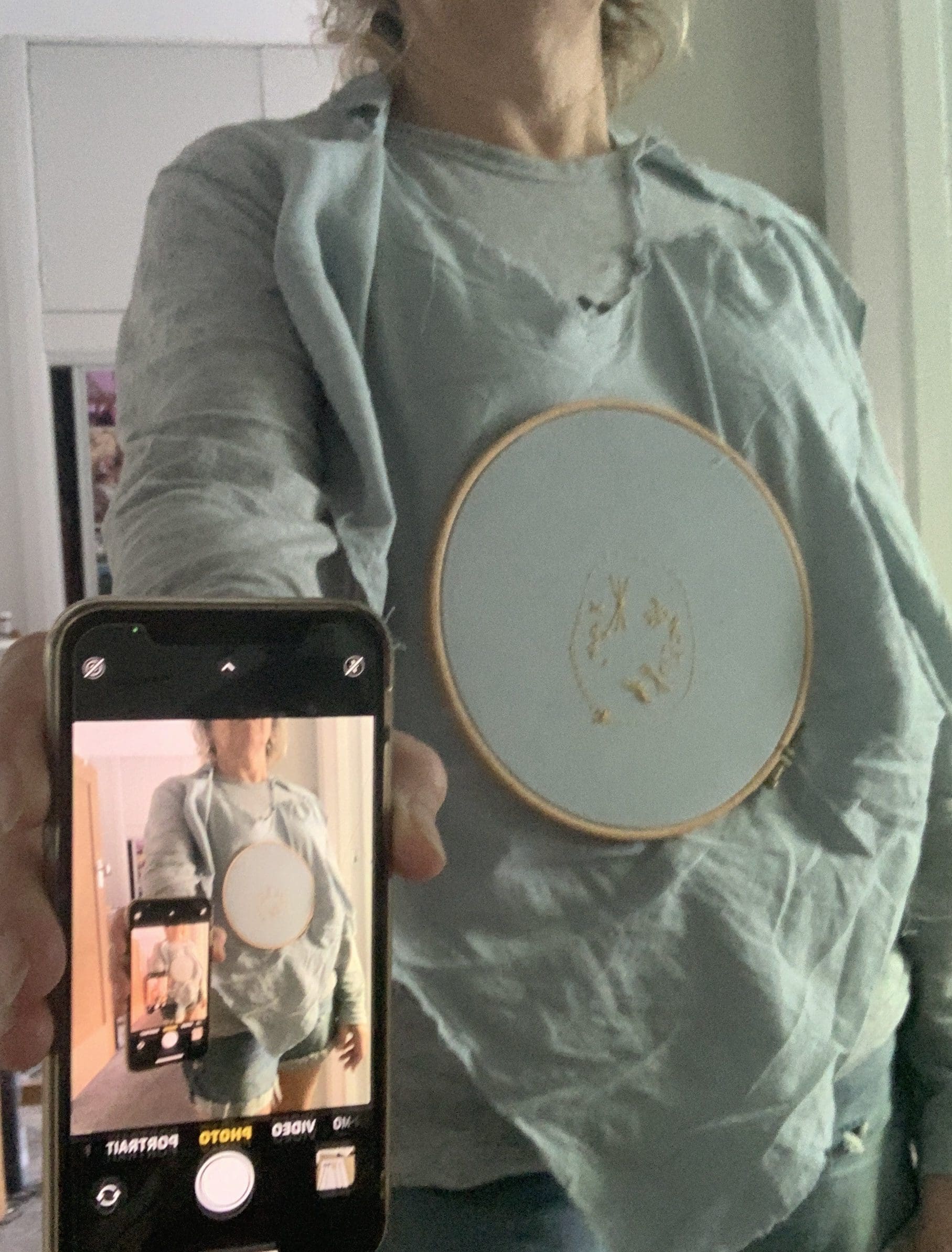
I am a believer of what you put in equates to what comes out. So how did someone who works with enamel, concrete and silver end up with fabric and thread? She took a risk, got inspiration from Estela and had the time to explore. The opportunity to do this is due to participation and immersion in the latest Masterclass organised through the Handshake program. Some things come quickly and are good, some are not. Some take a while and some still percolate many years after they are filed to the third drawer. Personally, the absolute joy of this ‘class’ has been the things that have risen to the top of that ‘third drawer’. Its the opportunity to look at ideas with the benefit of time and maybe confidence in oneself. I have no idea how I will move with the work in this image, but I love it and all it represents from the Masterclass, so Gracias Estela it was an absolute delight.
-
Growth
I landed on the path that I wanted to take for the Handshake Masterclass (HS7) quite early in the process, thanks to the tasks that Estella set.
While I had an initial vision of the direction I wanted to go in, having the fresh eyes of Estella and the team of other makers meant that I went further than I would have otherwise.
Receiving feedback allows you to open your mindset to new ideas, or to be resolute in the work that you want to make.
I did both.
The works I made are undoubtedly better due to this collegial feedback, being set tasks, and having conversations about where I was at. It took me in new directions.
To see what other makers do with their vision, their way of making, and their preferred materials is always eye-opening and inspiring.
These days we are so often working in isolation in our studios and don’t get these insights and connections.
What a treasure of a process.
-
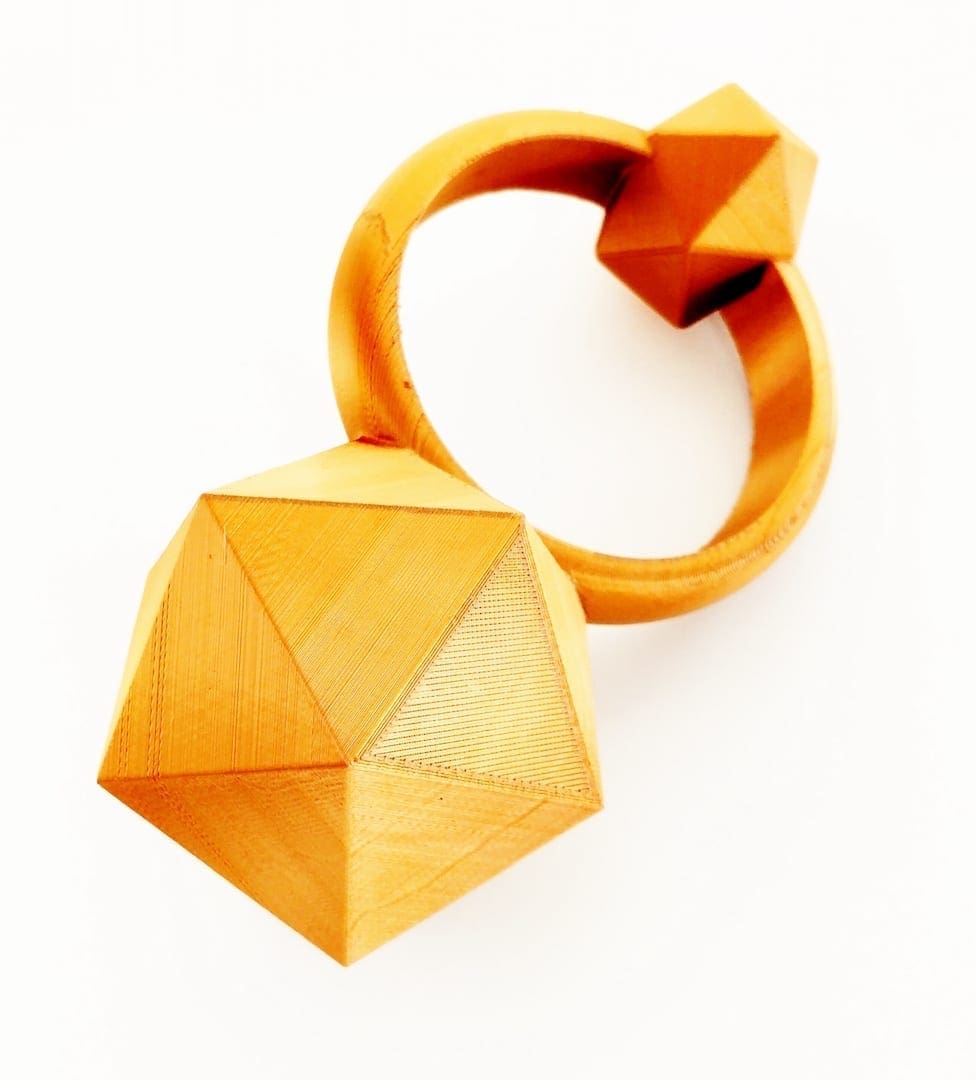
Layer Upon Layer
Creating the work for the Stanley St Show has been a steep learning curve as I’d never worked with 3D printing much before this year.
That was only part of the problem though as the options are endless. Trying to consolidate your ideas, while at the same time wanting to play, play, play, was hard. We all know that play is great to do just that, consolidate your ideas, but there comes a point where enough is enough!
Below are videos of the work in progress. The first video shows the machines in situ and the second and third show two of the different infills used in the pieces that you don’t see- cubic and gyro.


-Nik
-
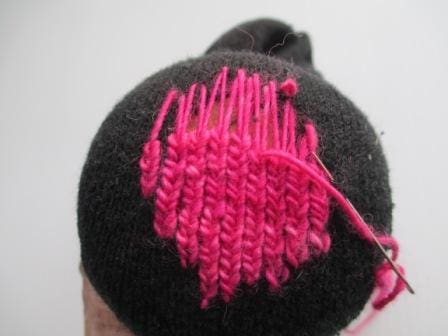
Darning in different languages
So far I’ve been using a very basic darning stitch – I have the mantra ‘over under’ constantly running through my mind as I work. But thanks to reading Tom van Deijnen’s (tomofholland) blog I’ve become aware of other darning methods, Finnish, Scottish and Swiss – all European. To get ready to use these new-to-me techniques, I’ve gone to the box of things waiting to be mended and pulled out some socks – usually I’ve use black wool on the black socks to make the darn as inconspicuous as possible, but it is not so easy to see the definition of the stitches. Looking in my stash of yarn I found some 3 ply pink that was perfect. The owner of the socks was bemused when shown the repairs, but commented he’ll make sure not to wear them if he thinks there is any chance he will have to remove his shoes. The second garment, now underway uses the Scottish darning stitch
.
 Finnish darning.
 Scottish darning
In looking through all the images of visible mending there are a great many using patches. These are more often associated with woven textiles such as denim. They usually feature the glorious patterns of Japanese Sashiko stitching which, using the layering of patches of kimono fabric in the boro technique meant garments could almost last indefinitely. Both the awareness of this combined technique and the appreciation of its versatility seem to be growing.
 Historical Japanese garment held in the Smithsonian collection
I have to say up front – I’m no expert. Perhaps the process of darning allows too much time for negative thoughts to creep in, but questions and certainly a level of guilt arises about taking a perfectly good used garments and potentially making them unwearable by cutting /poking holes in them do occur. I worry to about how my stitching be assessed, yes, I’ve been darning socks and school jumpers for years, but the audience for these efforts was uncritical and usually unaware, time was short and the wool was thick and forgiving. The metallic thread turns out to be tricky to sew with, the fine metal foil strips wound tightly around the silk thread core have a tendency to snag and concertina and it doesn’t form tight turns easily – learning what can and can’t be done, and ways of managing the problems is all part of the fun and frustration of tackling something new.
Tom vn Deijnen runs the Visible Mending programme in Brighton and has a mission to show that repairs to clothes can in themselves be beautiful. “Wear your darn like a badge of honour,” he says.
Thank you Tom!
-
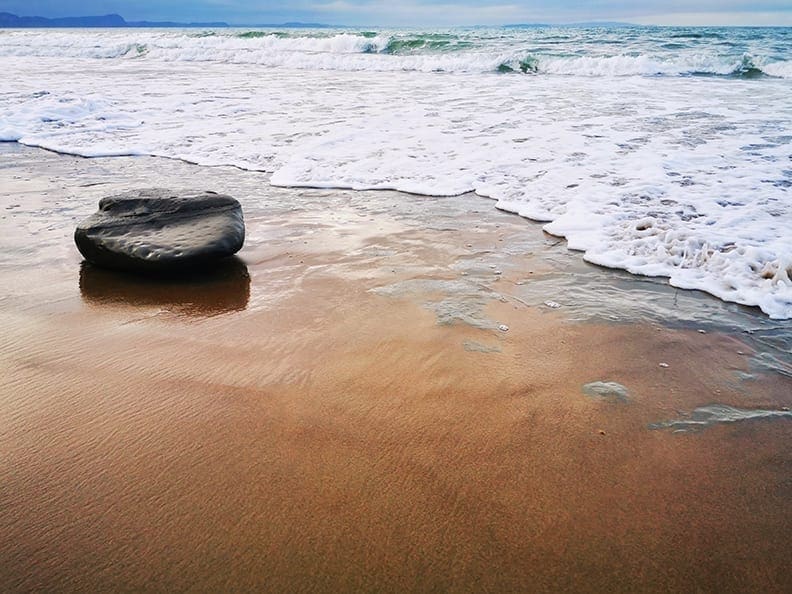
Atmosphere
Japanese design and architecture
This has been a source I continually draw on as inspiration since I began my contemporary jewellery journey almost 9 years ago. It probably also stems back even further with a few trips to Japan in my formative years, studying the language as a high school student and spending a year working there so I could fulfill my dream of snowboarding the land’s perfect powder. I remember travelling on a bus in the northern island of Hokkaido during winter and looking out the window after rounding a corner to reveal a scene that literally steals the breath from your chest even after 9 months of living there. High mountain ranges, a snow covered valley and feeling something deep in my thoracic cavity that made me think to myself that this is definitely one of my soul places.
The sensibility of how space is used is obviously one of Japanese design and architectures cornerstones, particularly creating atmosphere within a space. This may be traced back to the origins of Shinto.
Original sites of worship were not great monuments or grand architecture dedicated to a religious figure, but neutral features in the wild.

A mountain or a stream would be considered the home of a deity and a ritual site would be created nearby for observances. This sacred enclosure would be minimally denoted by some poles in a clearing or a rope stretched between two points.
Furthermore, in an extreme example, claims Arata Isozaki, “invisible kehai- or atmospheric indication of sacredness that the lay of the land itself might express- was deemed sufficient…”
-Blaine Brownell [Matter in a Floating World].Nothing fancy or closed in only for selected worshipers, but a place for everyone. I like this.
Spending time in nature gives me a similar feeling to this religious practice. Photographing in nature makes me subconsciously aware of possible ‘deity sites’, and when I review the images later, I am blown away that they really do exist all around us.It may seem unconventional, but for me this kind of research has informed my initial material sketches for this project.
I am drawn to the idea of linking held open space and vast containment. It is not the kind of containment where 4 walls can close in on you or even conceal something of value. It is both something a l m o s t disguised but actually in plain view.
-
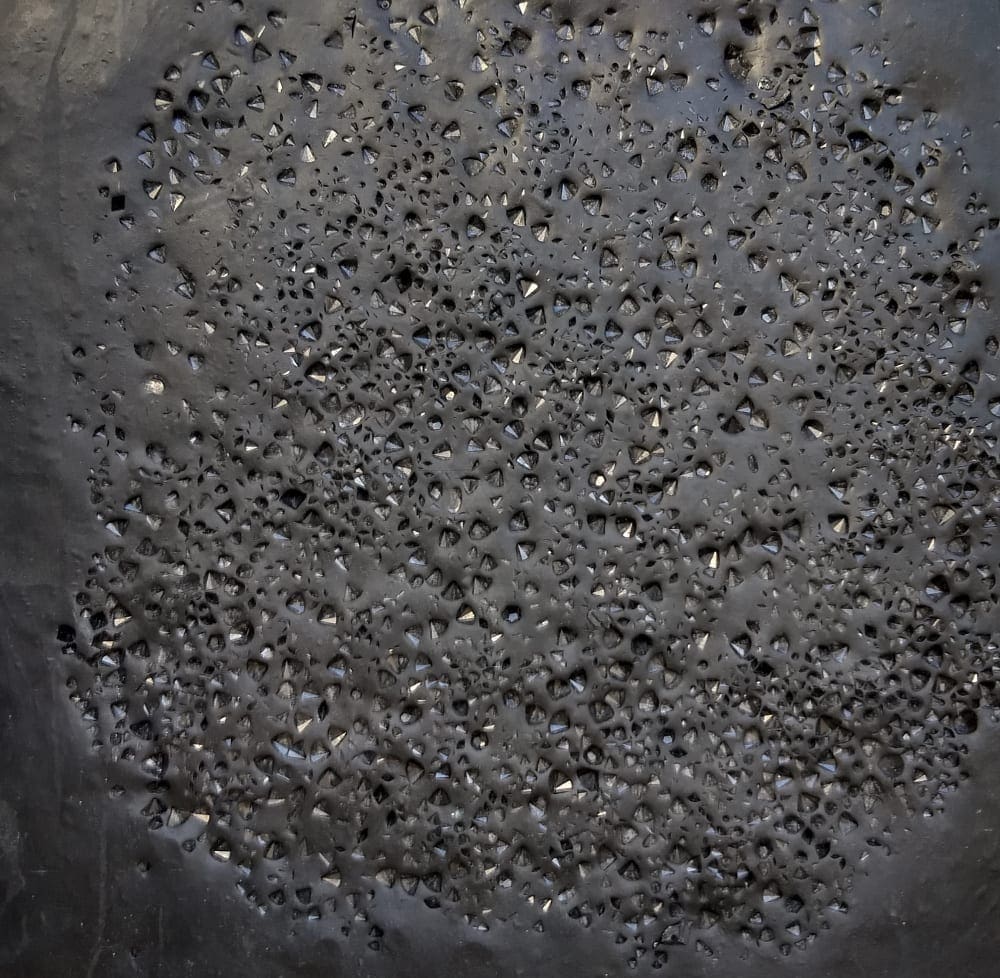
Heat Treated
A delicious refreshing spin on the origins of gemstones and the various treatments used to enhance their colour and beauty.
RECIPE
INGREDIENTS
Assorted shiny things e.g. faceted gemstones, shattered hard drive, glass beads
Polymer clay
Rolling pin
Baking paper
Baking tray
Cutting board
Craft knife
Metal ruler

METHOD
- Pre-heat oven to temperature recommended by polymer clay manufacturer.
- With clay encased in doubled up baking paper, roll out clay to thin squareish size, a size a bit larger than 20 x 20 cm.
- Place baking paper on baking tray, scatter shiny things over whole area.
- Place polymer clay sheet on top and press down.
- Scatter shiny things on top of clay sheet.
- Put baking paper on top and pass rolling pin over to really embed the shininess.
- Place tray in oven and heat for as long as recommended.
- Take out of oven and leave to cool.
- When the clay has cooled, flick shiny things out.
- Trim square to 20 x 20 cm using craft knife, cutting board and metal ruler.
- Repeat a further 9 times until you have ten squares in total.
-
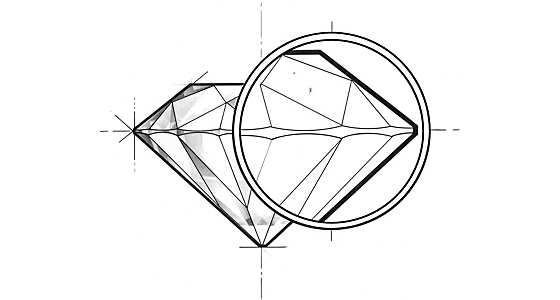
The 4 c’s when valuing a diamond

Carat, Colour, Clarity, Cut. These are the fundamental concerns when searching for that perfect gem. Those are the C words that cause rapture, revolt, rage and maybe refusal. But what about the setting. The scaffold that is designed to make the lesser gem shine brighter, look larger, weigh heavier and dazzle the family. Lets think about the materials that can be used, the time taken. the environmental effects on the materials traditionally used to support the shining hero. What about the health effects on a maker who produces the supporting act? There will be an absence of those 4 C’s in the final pieces but there will be Creativity, Choice, Care and Cleverness. -

O p e n S p a c e s
‘Holding space’
An act that is at once present and totally invisible. – Harrison OwenThe trust of self organisation, the force that created the universe and brought us to this point, will continue to work its magic.
A principle in submitting yourself to self-organisation is that you must let go of outcomes, that whatever happens is the only thing that could have happened in that moment. Chris Corrigan [The Tao of Holding Space]My research circulates on how I can bring this concept of ‘holding space’ to a container for holding a jewellery piece. Last year I took part in a yoga teacher training, and holding space in a state of presence for your students was discussed. I have also been fortunate enough to have had space held for myself in times when I needed it, and also held space for others in a similar way. The first few times I had not yet heard of the concept, but upon reading about it later on, immediately recognised what had happened and its significance.
‘Containers of transformation’ is another buzz phrase I have heard circulating and also experienced in the last few years. Not being an actual physical container but that of an energetic or metaphorical type delegated to the realm where outcomes are unknown and out of our immediate control, but where there is a specific intention and calling in of energy required…
